The problem
A store must manage products, categories and pricing, receive and assign orders to delivery staff, track payments, provide apps for customers and couriers, and present a public catalog — usually split across systems that do not sync.
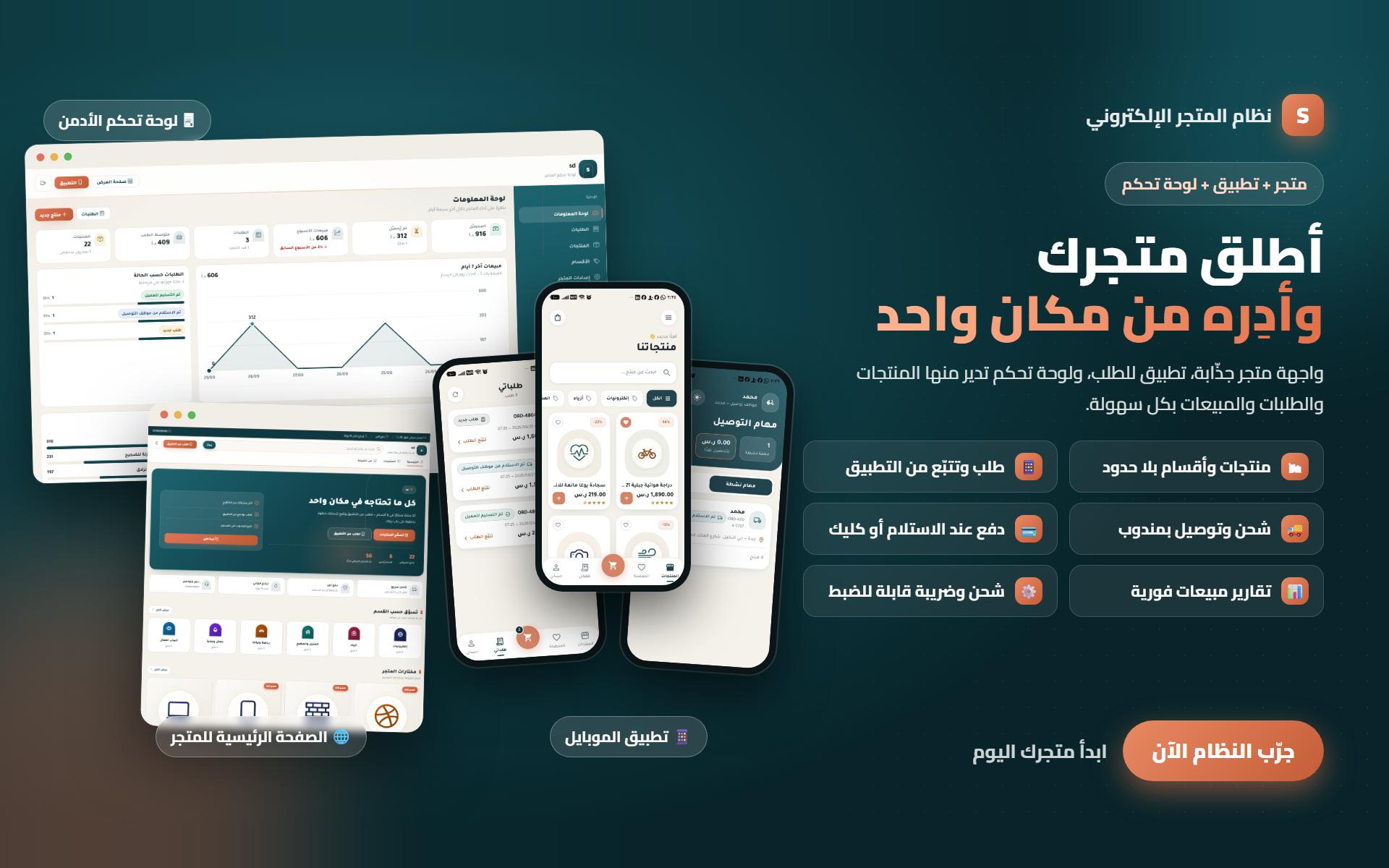
An integrated e-commerce platform built as three pillars — a two-mode mobile app (customer & delivery), an admin dashboard, and a public storefront — all on one database and one API with real-time sync, yet each pillar ships independently.
Click any part to try it live.
The web admin panel — five sections: products & categories, orders & assignment, payments, and settings.
The public site visitors see before becoming customers: catalog with search, sort, filter and per-product pages.
A Flutter app with two modes on one account.
A store must manage products, categories and pricing, receive and assign orders to delivery staff, track payments, provide apps for customers and couriers, and present a public catalog — usually split across systems that do not sync.
Three independently-deliverable pillars on a unified database and API: a Flutter app with two modes on one account (customer / delivery), a five-section web admin panel (products & categories, orders & assignment, payments, store/shipping/tax settings), and a public storefront with catalog, search, sort, filter and per-product pages — with full per-store data isolation (multi-tenant).
Orders from the customer app appear instantly in the admin panel, assignment reaches the courier app in real time, and settings changes reflect on the storefront — each visitor gets an isolated demo store.